Lu ting He

photo-small
photo-big

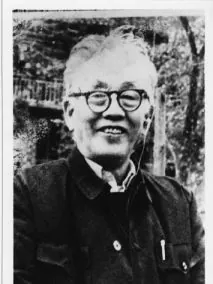
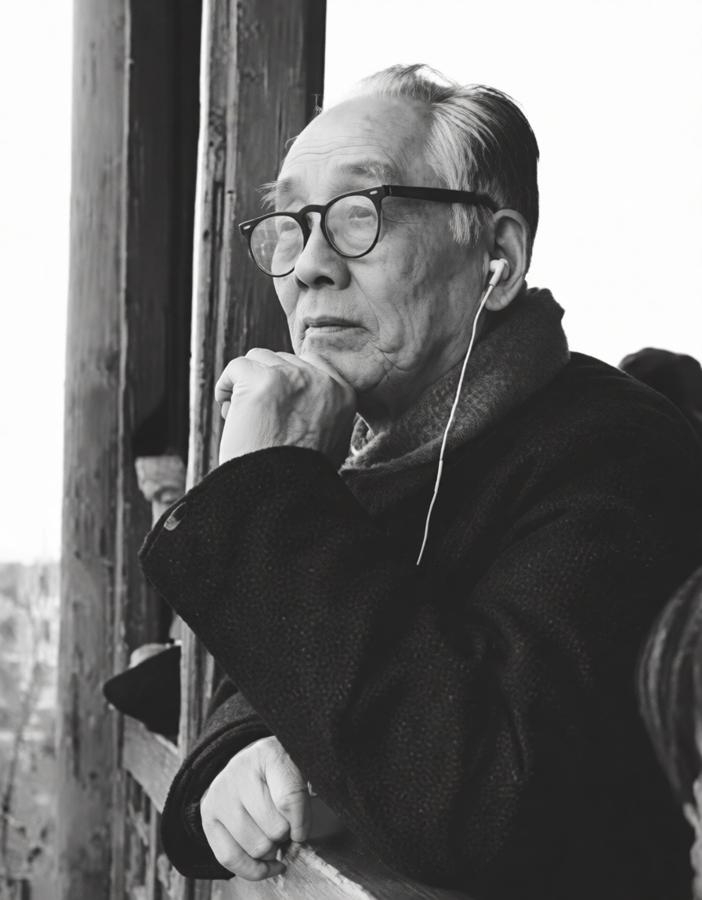
Luting He(July 20, 1903 – April 27, 1999), male, originally named He Anqing, also known as He Baozhen and He Kai, was born in Machangtang, Dongxiang, Shaoyang, Hunan Province.

He was a Chinese composer, music theorist, and music educator, and formerly served as Vice Chairman of the China Federation of Literary and Art Circles, Honorary Chairman of the China Musicians Association, and President of the Shanghai Conservatory of Music.
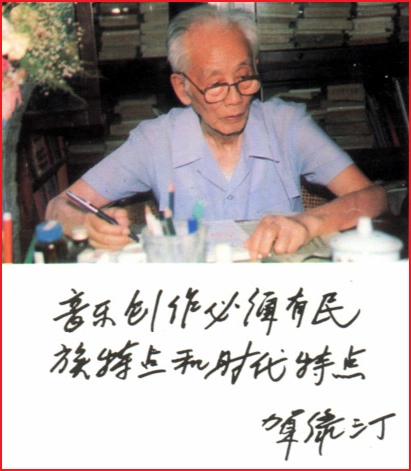
Music should serve the people

photo-quote

Artwork

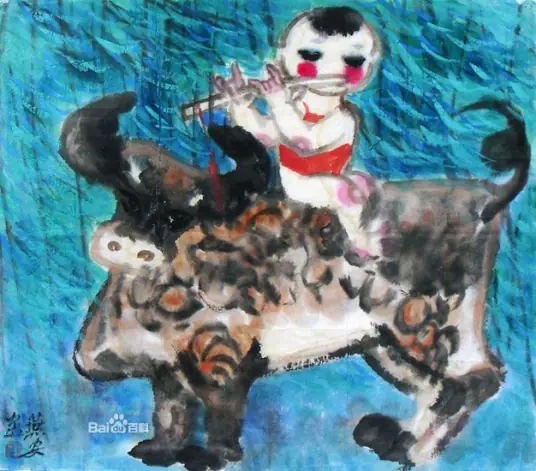
The Shepherd Boy's Flute Cover

The Shepherd Boy's Flute

Originally titled "The Shepherd Boy's Flute," "Pastoral Flute" is a piano piece composed by Mr. He Luting in 1934. It is the first Chinese piano work with distinct and mature Chinese stylistic characteristics, depicting an entirely different kind of Chinese pastoral musical landscape from Western styles. By combining Western polyphonic techniques with Chinese national style, and integrating European music theory with traditional Chinese music, the piece presents unique features of Chinese artistic character, marking a new chapter in Chinese piano music and serving as a creative model in modern Chinese piano composition.

"Little Herdsman's Short Flute" employs colorful elements of melody, harmony, tonality, and rhythm. Through fresh, fluid lines and a two-voice polyphonic melody that responds and answers one another, it depicts scenes of a young herdsman tending his flock, playing the flute, frolicking, and returning home. The work's opening section adopts a traditional folk dance style, with lively rhythms and melodies that vividly bring to life the image of an innocent herdsman riding atop an ox, leisurely blowing his flute.

"The Shepherd's Flute" is a modern Chinese piano piece born from the New Culture movement, depicting a pastoral soundscape distinctly different from Western styles. Its creative approach, which bridges past and present while integrating Chinese and Western traditions, has laid a solid and unique foundation for the work, achieving a perfect unity of national character and universal appeal.

As noted by the "Xinmin Evening News": "The most important and memorable aspect is that he broke down the boundaries between Chinese tonality and Western music theory." The success of "The Shepherd's Flute" lies precisely in its deep roots in Chinese tradition alongside its radiant Western hues, reflecting the composer's courage and successful endeavor to harmonize East and West, ancient and modern.

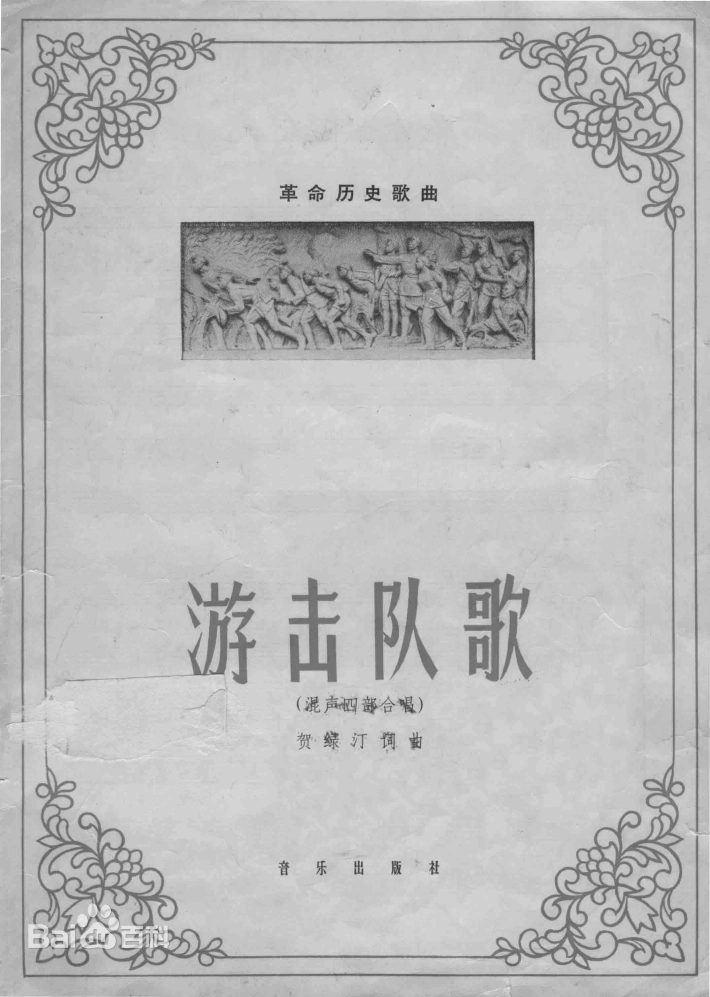
The Guerrilla Song Cover

The Guerrilla Song

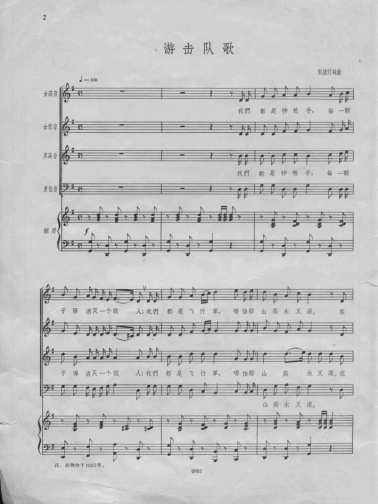
The Guerrilla Song is an anti-Japanese resistance song composed in 1937. It was first performed on January 6 of the following year by the "Shanghai Cultural Circle Anti-Japanese Salvation Drama Troupe No. 1," conducted by He Luting, at a meeting of Eighth Route Army cadres, released as a single by Music Publishing House in 1966.

"The Song of the Guerrillas" is an anti-Japanese war song born on the front lines of battle. As a vital component of anti-Japanese military culture, it boosted the morale of the Eighth Route Army, fostered unity between soldiers and civilians, and spread widely among troops and the general public. More than just an enduring mark of the heroic years of the War of Resistance against Japan, it sings of the national spirit—wise, brave, resilient, and unyielding—inspiring successive generations of Chinese people to move forward with courage.

The melody of "Partisan Song" is light and fluid, vivid and lively, permeated throughout by a flexible, snare-drum-like rhythm that lends the tune a sense of forward motion while portraying the partisans' clever and agile maneuvers against the enemy, waiting for the right moment to strike. The entire piece features a concentrated vocal range, striking imagery, and accessible language—qualities that have enabled it to remain a beloved staple in popular singing for generations.

Live

July 20, 1903 Born
Autumn 1926 Studying
1934 Composed "Pastoral Flute"
1937 "Guerrilla Song" published
1949 Founded Shanghai Conservatory
April 27, 1999 Passed away

Main Impact

He Luting integrated Western compositional techniques with Chinese national musical characteristics. His serenity compositional style became the main compositional style. During the War of Resistance against Japanese Aggression, the musical spirit and the battle spirit in his works, such as the Guerrilla Song, additionally included the Ode of the New China. He also created On the Atlas of Rivers and the China Symphony. After the founding of the People's Republic of China, He Luting was appointed president of the Shanghai Conservatory of Music. He promoted the development of Chinese national music and the establishment of a characteristic music education system. His artistic standards set the model for music teaching, and his musical ideas set the aesthetic standard for Chinese music. His vision profoundly influenced the whole development trajectory of Chinese professional music education
Reference material

1. He Luting, Shanghai Municipal People's Government. [Accessed 2021-06-16]

2. 200 Years of Masters: Music Edition | He Luting - Official Website. [Accessed 2022-05-12]

3. The Party's History Illuminates the New Journey | Visiting He Luting's Former Residence...

4. He came from the people and dedicated his life to the cause of national music...

5. Symposium held to commemorate the 120th anniversary of the birth of Mr. He Luting. Shanghai Conservatory of Music (Accessed 2023-04-11)

6. He Luting (July 20, 1903 – April 27, 1999). Shanghai Tong (Accessed: 2024-04-11)

7. Member of the Party Group and Vice Chairman of the Chinese Musicians Association (Accessed 2025-10-26)

8. Commemorating the 120th Anniversary of He Luting's Birth: His Life and Work (Accessed 2025-10-26)

9. He Luting Party History Music works (Accessed 2025-10-26) Daily Accessed 2026-01-27